Suitability
Is your home suitable for solar?
By Daniel Osei · Last checked 24 June 2026
Most UK homes can take solar panels. The real question is whether yours is a good enough fit to be worth it, and you can get a fair idea yourself in a couple of minutes. This page walks through what actually matters, so you can judge your own roof before anyone visits.
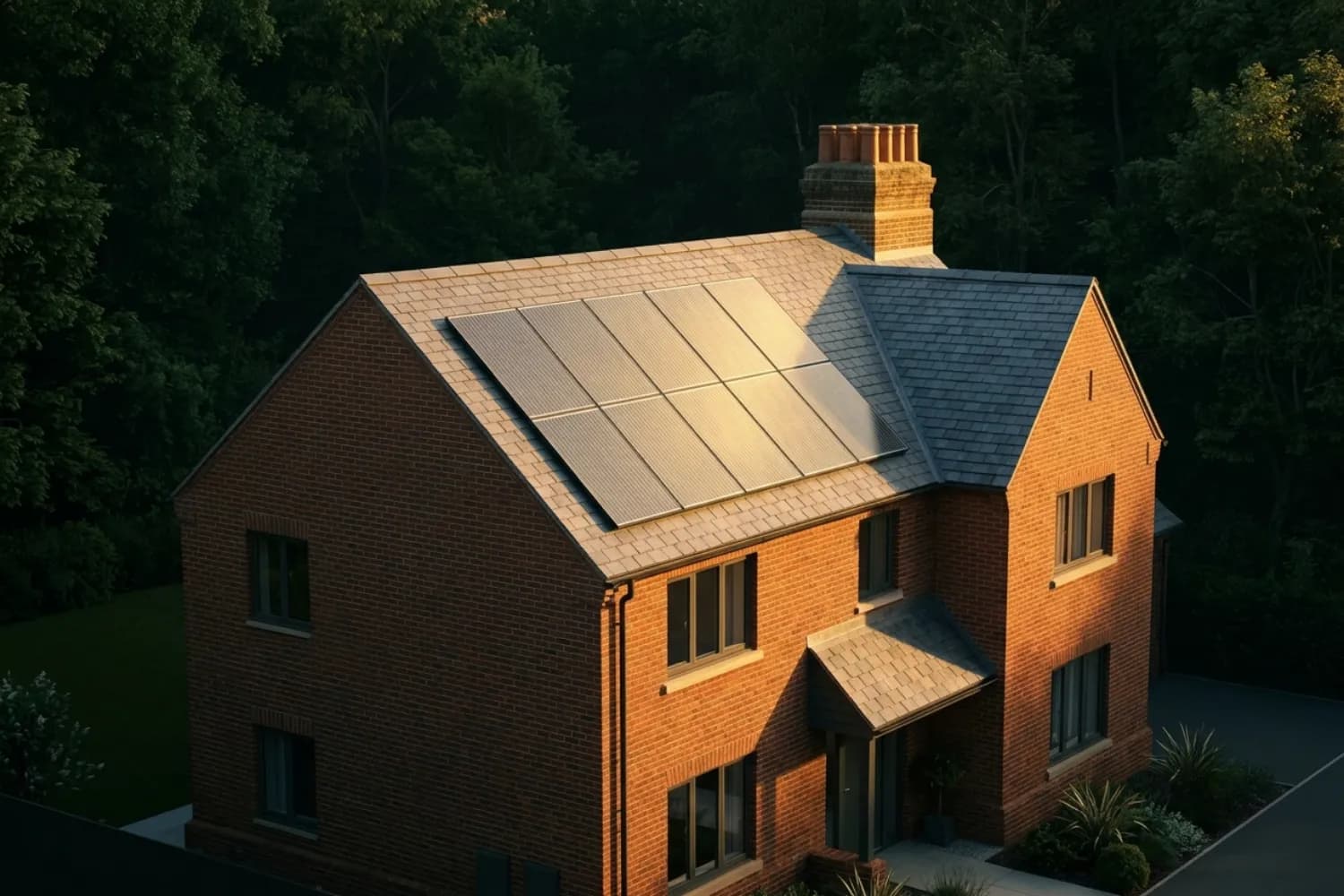
The quick version
Solar is usually worth a proper look if your roof:
- Faces somewhere between east and west (south is best)
- Is not shaded for much of the day
- Has roughly 16 square metres of clear space, about 10 panels
- Is in good condition with years of life left
If that sounds like your roof, the numbers are likely to stack up. The rest of this page explains why, and what to do if one of these is a problem.
Which way your roof faces
This is the single biggest factor. A south-facing roof gets the most sun over the year, and it is the benchmark everything else is measured against.
East and west-facing roofs still work well. They produce roughly 80 to 90 percent of what a south-facing roof would for the same system. In many homes that small drop barely changes the decision, and an east or west roof can actually suit you better, because it generates more in the morning and evening when most households use the most power.
North-facing roofs are the ones to be wary of. A north-facing main roof generates a lot less, often a third to a half below south, so it is rarely worth it on its own. If your only option is a north slope, it is usually better to look at a different roof face, an outbuilding, or to wait.
| Roof direction | Rough output vs south |
|---|---|
| South | 100%, the benchmark |
| South-east or south-west | About 95% |
| East or west | About 80 to 90% |
| North | Often only 55 to 70%, rarely worth it alone |
How steep your roof is
Most UK roofs sit between 30 and 45 degrees, which is close to ideal. Anywhere from about 15 to 50 degrees still gives you the large majority of the possible output, so pitch is rarely a deal-breaker on a normal house.
Flat roofs are fine too. The panels go on tilted frames rather than lying flat, so they sit at a sensible angle and stay cleaner. That adds a little cost and weight, which is worth knowing if your roof is older.
Shade is the thing to watch
Shade does more damage than people expect, especially between mid-morning and mid-afternoon when the sun is strongest. A single chimney, tree or neighbouring building falling across the panels can drag down output across a whole run of them, not just the part in shadow.
The good news is that it is manageable. Power optimisers and microinverters let each panel work on its own, so one shaded panel no longer holds back the rest. A good installer measures the shade on your roof and builds it into the estimate, rather than guessing.
How much clear roof you need
As a rough guide, every panel is roughly two square metres, and a typical home system is 8 to 15 panels. You do not need a huge roof. A system worth fitting starts at around six panels, so a small or broken-up roof usually just means a smaller system, which still helps.
| System size | Panels | Clear roof needed |
|---|---|---|
| 3 kW | About 8 | Around 12 to 14 m² |
| 4 kW | About 10 | Around 16 to 20 m² |
| 6 kW | About 15 | Around 24 to 30 m² |
The state of your roof
Panels are built to last 25 years or more, so the roof underneath them needs to be in good shape first. As a rule, it should have around 20 years of life left before it needs major work.
If your roof is near the end of its life, get it sorted before the panels go on. Otherwise you risk paying to take the panels down and put them back up again later, which adds a lot to the real cost.
Whether your roof can take the weight
Most modern tiled and slated roofs carry solar panels without any trouble. Older roofs, lightweight extensions and garage roofs are the ones worth checking, and a flat roof using weighted frames carries more load than a standard pitched install.
This is the installer’s job to check, and they will bring in a structural engineer if there is any doubt.
What your roof is made of
The roof material itself makes very little difference to how much power you generate. It mainly affects how the panels are fixed, and how much the fitting costs.
Concrete and clay tiles, and natural or fibre-cement slate, are all straightforward and cover most UK homes. Slate is a little more labour-intensive, so it can nudge the cost up. Metal and corrugated roofs are fine with the right clamps.
A few roof types are usually a problem. Thatch is a fire risk, asbestos-cement sheeting is fragile and best left undisturbed, and fully glazed roofs are hard to fix to and keep watertight. These often need a bespoke approach, or panels somewhere else such as an outbuilding.
Getting it checked properly
Everything here helps you judge your own roof. The formal assessment is done by an MCS-certified installer, the standard you need for export payments and most grants. They measure orientation, shade and structure properly, and give you a performance estimate for your specific roof.
See what solar would do for your roof
Put in your postcode and a couple of details and we will model what a system would generate at your exact location, with the likely cost and payback.
Find your situation
The basics above apply to every home, but some property types and roof shapes have their own quirks. Pick the one that fits yours.
Common questions
- Do I need a south-facing roof for solar?
- No. South is best, but east and west-facing roofs produce around 80 to 90 percent as much, and are usually still worth it.
- Does solar work on a north-facing roof?
- A north-facing main roof generates a lot less, often a third to a half below south, so it is rarely worth it on its own. A different roof face or an outbuilding is usually a better bet.
- Will solar work on a flat roof?
- Yes. The panels sit on tilted frames so they face a sensible direction. It costs a little more and adds weight, so an older flat roof is worth checking first.
- How much roof space do I need?
- Around 16 to 20 square metres for a typical 10-panel system, though smaller systems from about six panels are still worthwhile.
- Does shade stop me getting solar?
- Not usually. Optimisers and microinverters let the unshaded panels keep working normally, and a good installer designs around the shade on your roof.
- Do solar panels work in winter or on cloudy days?
- Yes, just less. Panels run on daylight, not heat, so they still generate on grey days, only at a lower rate. Output is higher in summer than winter, and the yearly figure already takes the darker months into account.
- Can I add more panels later?
- Sometimes, but it is not always simple. It depends on spare roof space and whether the inverter can handle more. It is usually cheaper to fit the right size from the start, so it is worth sizing for your future use, not just today.
- Will solar panels damage my roof?
- Not when fitted properly. The mounts are designed to seal around the fixings and keep the roof watertight. This is one reason the roof should be in good condition first, and why the fitting is best left to a certified installer.