Rules & planning
Do you need planning permission for solar panels?
By Daniel Osei · Last checked 25 June 2026
For most homes, putting solar on the roof does not need planning permission. It counts as "permitted development", as long as it stays within a couple of simple limits. The exceptions are listed buildings, some conservation-area roofs, and flats. This page explains the rules and points you to the official source for your own case.
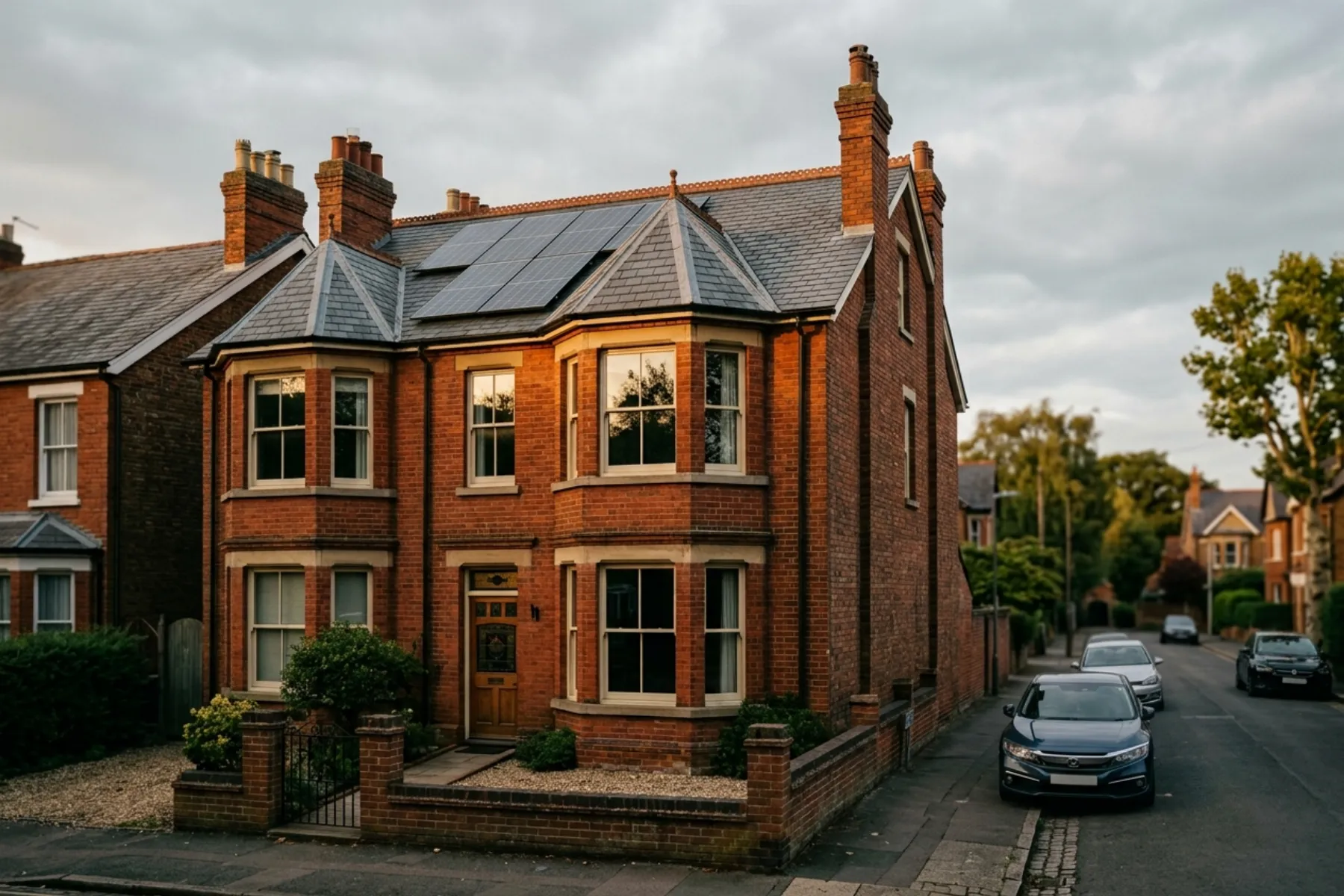
The quick version
- Most roof solar is permitted development, so no planning application is needed
- The main limits: panels no more than 0.2 m proud of the roof, and not above the ridge
- Listed buildings need listed-building consent; conservation areas restrict highway-facing roofs
- Flats need freeholder consent, and your installer handles the grid connection
The general rule: permitted development
In England, fitting solar panels to a house is "permitted development", which means no planning application, provided it stays within the limits. The two that matter most: the panels must not stick out more than 0.2 metres from the roof or wall, and they must not sit above the highest part of the roof (the chimney does not count). There is also a general condition to site them so they have as little visual impact as practicable, and to take them down when no longer needed.
Scotland, Wales and Northern Ireland have their own rules, but they are broadly similar. Even when no planning is needed, building regulations still apply and your installer still notifies the grid operator.
When you might still need permission
Permitted development rights fall away in a handful of situations. If any of these apply, you usually need a planning application, and sometimes a separate consent.
| Situation | What it means |
|---|---|
| Listed building | Needs listed-building consent, and usually planning permission |
| Conservation area, roof fronting a highway | Planning permission needed; rear roofs are often still permitted |
| Article 4 direction | The council has removed permitted development rights locally, check with them |
| Flat or shared roof | Freeholder consent needed; planning too if listed or in a conservation area |
| Scheduled monument | Planning permission plus scheduled monument consent |
Listed buildings
If your home is listed, solar on the building or anything within its grounds is not permitted development at all. You normally need listed-building consent as well as planning permission, and the council will weigh up the visual impact and whether the panels could be removed later without harm. Planners often prefer panels on a rear roof, an outbuilding, or out of sight from the street.
The 2023 rule changes
The rules were loosened at the end of 2023. Solar on a flat roof is now permitted development, where it was more restricted before. And on protected land, such as National Parks, National Landscapes (AONBs), conservation areas and World Heritage Sites, some installations now go through a lighter "prior approval" step with the council rather than a full application.
Connecting to the grid (your DNO)
Separately from planning, your system has to be registered with the local network operator, the DNO. For most homes this is simple: systems up to 3.68 kW of export per phase can be connected and then notified within 28 days (the G98 process). Larger systems need the DNO to approve them first (the G99 process), which usually takes a few weeks.
Your installer handles all of this. On a busy local network the DNO may cap how much you can export, which still lets you use the power yourself. None of it is something you fill in.
What to actually do
If your home is not listed and not in a conservation area, you almost certainly do not need to do anything on the planning side, and your installer takes care of the grid notification. If you are in a conservation area or a listed building, contact your council and ask for the conservation or planning officer before committing. It is also worth checking whether an Article 4 direction applies to your street. When in doubt, your local planning authority is the place that actually decides.
See what solar would do for your home
Put in your postcode and a couple of details for a quick estimate of system size, output, cost and payback.
Go deeper
Common questions
- Do I need planning permission for solar panels?
- Usually not. Roof solar on a normal house is permitted development as long as the panels sit no more than 0.2 m proud of the roof and not above the ridge. Listed buildings, some conservation-area roofs and flats are the main exceptions.
- Can I put solar on a listed building?
- Often yes, but it is not permitted development. You need listed-building consent and usually planning permission, and panels are typically expected on a rear roof or somewhere not visible from the street. Talk to your council early.
- What about solar in a conservation area?
- Panels on a roof that does not front a highway are often still permitted development. Panels on a roof facing the road usually need planning permission. Check whether an Article 4 direction applies to your area.
- Do I need permission for solar on a flat roof?
- Since the end of 2023, flat-roof solar on a house is generally permitted development. On protected land it may go through a lighter prior-approval step with the council.
- What is a DNO and do I have to apply?
- The DNO is the company that runs your local electricity network. Your system has to be registered with them, but your installer handles it. Small systems are notified after fitting; larger ones need approval first, which takes a few weeks.