Commercial solar
Solar panels for warehouses and logistics
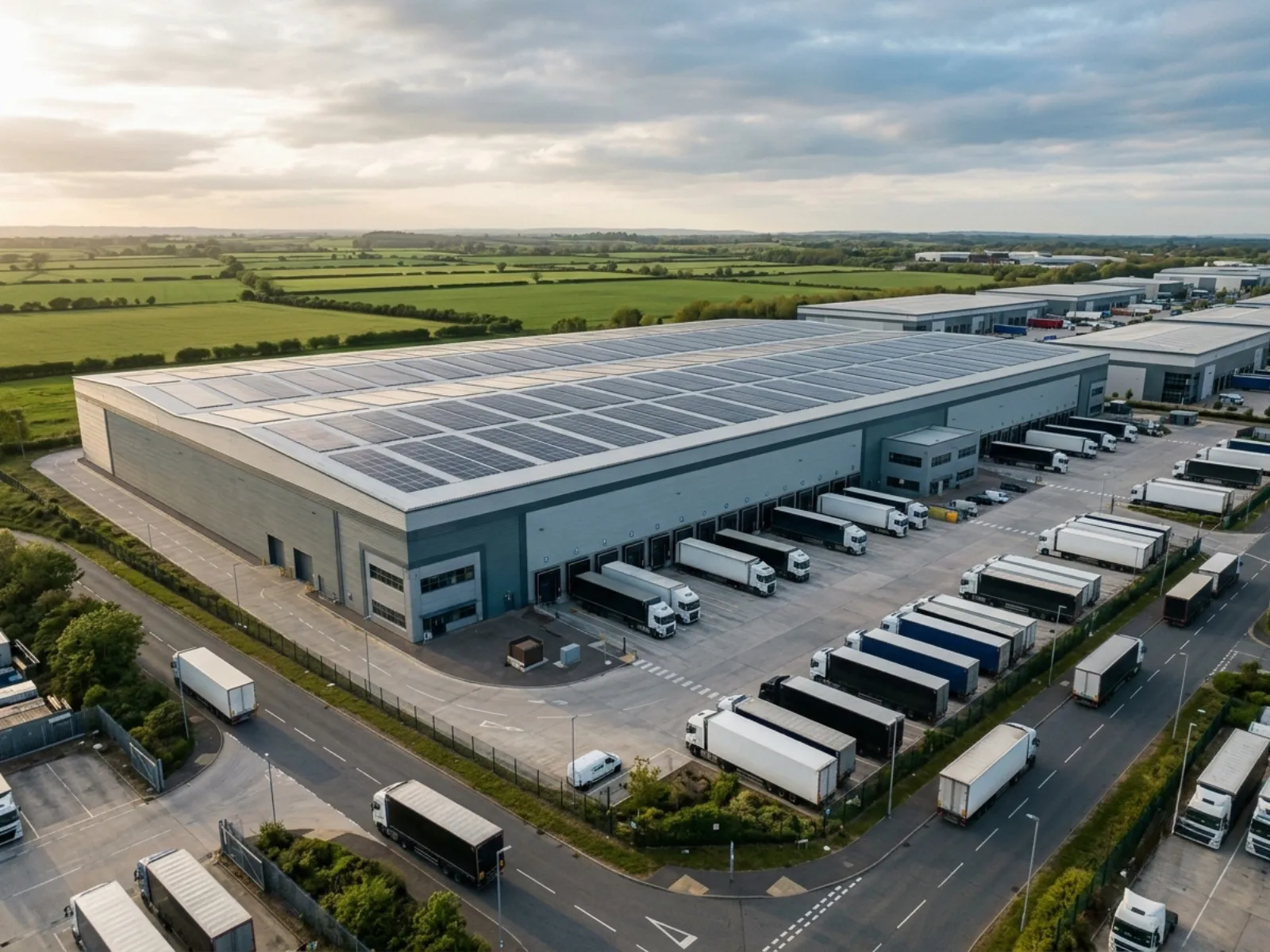
Warehouse and distribution roofs are the best in the country for solar: huge, flat, unshaded and under one owner. The catch is demand, which is often modest for the roof size, so the real question is how much you use versus how much you export.
- Accredited installers
- No obligation
- UK-wide
- typical system
- 50–500 kWp
- typical payback
- ~5–7 yrs
- the models to weigh
- Export & PPA
Why warehouses suit solar
A large single-span roof takes a big array with simple access and one decision-maker, which keeps the cost per kW down and the install straightforward. Few building types offer as much clean, unshaded roof.
The trade-off is that a warehouse can generate more than it uses in the day, especially a storage unit with few staff and little machinery. That is not a problem, it just shifts the economics toward export, and it is why warehouses are the building type where a Power Purchase Agreement or a roof lease often makes the most sense.
A worked example
Take a 250 kWp system on a distribution unit roof, costing around £210,000.
- about 620 panels
- 250 kWp
- kWh a year
- ~225,000
- saved a year
- ~£40,000
- payback
- ~5 yrs
It generates roughly 225,000 kWh a year. A unit with moderate daytime demand uses about two thirds on site, worth around 25p a unit against the grid, and exports the rest for a few pence through the Smart Export Guarantee. That is in the region of £40,000 a year.
If your daytime demand is lower, more is exported and the on-site saving falls, which is exactly when a PPA (a funder owns the system, you buy the power cheaply) or a roof lease can turn a big underused roof into income. The assessment models both against your actual half-hourly data.
Assumes a business electricity price of about 25p a unit (DESNZ Quarterly Energy Prices), export at around 5p a unit through the Smart Export Guarantee, and a yield of about 900 kWh per kWp a year. Your own figures depend on your roof, tariff and usage. Reviewed July 2026.
What a survey checks
The main checks are structural: portal-frame and older roofs need their loading confirmed before a big array goes on. After that it is the usable roof area, any roof lights or plant to work around, and your daytime demand profile.
If you lease the building, solar needs the landlord and tenant to agree who pays and who benefits, which is worth raising early. A survey and your energy data settle the sizing.
How you pay
Warehouses are the classic case for a Power Purchase Agreement or roof lease, where a third party funds and owns the system and you buy the power below grid price, or rent the roof. Buying outright keeps all the saving and can qualify for capital allowances.
Solar panels for factories and manufacturing
Run machinery through the day and self-consumption climbs, which is the strongest payback case in commercial solar.
Agricultural solar panels for UK farms
Large, simple barn roofs and the same export-versus-self-use question, on a farm.
Related guides
Common questions
- What if we use very little power in the day?
- That is common for storage units, and it is not a dealbreaker. A lower daytime demand means more of the generation is exported, so the case shifts toward a Power Purchase Agreement or a roof lease, where a funder owns the system and you either buy the power cheaply or rent out the roof. The assessment models your actual usage before recommending a route.
- Can our flat warehouse roof take solar?
- Usually yes. Flat roofs use ballasted or mounted frames set at a shallow tilt, and the main thing to confirm is that the roof structure can carry the extra load, which the survey checks. Portal-frame and older roofs sometimes need a structural sign-off first.
- We rent the building. Can we still install solar?
- Yes, but it needs the landlord and tenant to agree who funds it and who keeps the saving, and the lease usually needs consent for the works. A roof lease or PPA can suit split ownership, since the funder deals with the roof and you buy the power. It is worth raising with the landlord early.
- Will panels affect our roof warranty?
- A competent install works with the roof covering and its warranty rather than against it, and the survey checks the roof condition and fixing method up front. If the roof is near the end of its life, it is often worth addressing that before, or alongside, the solar.
Sources
Reviewed by Daniel Osei · Last checked July 2026. Funding and tax rules change, so we re-check this page regularly and date it when we do.
See whether solar stacks up for your site
Tell us about your building and roughly what you spend on electricity, and we will help you work out the cost, output and return. Free, no obligation, and the work is carried out by accredited installers.