Commercial solar
Solar panels for hotels and hospitality
A hotel runs around the clock, which is unusual and useful for solar. Unlike an office that empties at the weekend, there is always a daytime load, so most of what the panels generate is used on site.
- Accredited installers
- No obligation
- UK-wide
- typical system
- 30–150 kWp
- typical payback
- ~5–7 yrs
- so high self-use
- Runs all day
Why hospitality suits solar
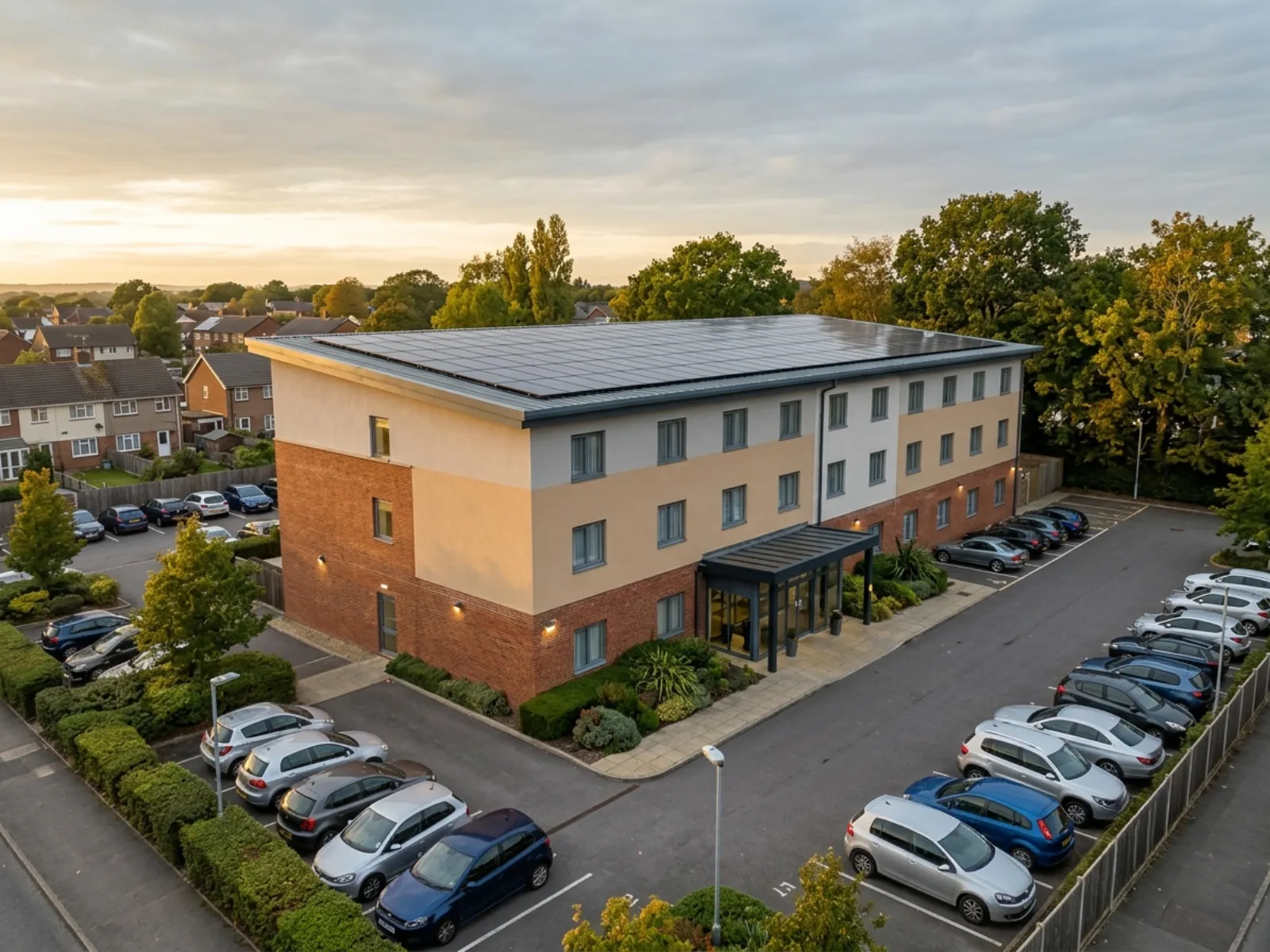
Hot water, kitchens, refrigeration, air conditioning and pools or spas give a hotel a solid, continuous daytime load. Because the building is never really empty in the day, there is always demand to soak up the generation, so a hotel self-consumes a high share of what it produces. In summer, peak occupancy and cooling coincide with peak generation, which is a genuinely good match.
The one part solar cannot reach on its own is the evening restaurant-and-guests peak and the overnight load, since the panels only generate in daylight. That is the clearest case in commercial solar for adding a battery: store the day’s surplus and use it in the evening. The panels pay back on their own, and a battery is an add-on to weigh, not a dependency.
A worked example
Take an 80 kWp system on a mid-size hotel roof, costing around £88,000.
- about 200 panels
- 80 kWp
- kWh a year
- ~72,000
- saved a year
- ~£14,000
- payback
- ~6 yrs
It generates roughly 72,000 kWh a year. Because the hotel runs a continuous daytime load, it uses around three quarters on site, worth about 25p a unit, and exports the rest, coming to roughly £14,000 a year.
A battery would not change how much the panels generate, but it would shift some of the daytime surplus into the evening peak, cutting more of your grid import. The assessment sizes both the array and any battery to your actual load.
Assumes a business electricity price of about 25p a unit (DESNZ Quarterly Energy Prices), export at around 5p a unit through the Smart Export Guarantee, and a yield of about 900 kWh per kWp a year. Your own figures depend on your roof, tariff and usage. Reviewed July 2026.
Buildings, heritage and disruption
Modern hotels tend to have flat roofs suited to tilted frames, while country and period hotels have pitched roofs. Many hospitality buildings are period properties, and some are listed or in a conservation area, which changes what is allowed, so heritage checks come first for those sites.
Installation is external, on the roof, and can be phased around occupancy, so it need not close the hotel. Your installer sets out a timeline that works around bookings before anything starts.
B&Bs and guest houses
A small B&B run from home often sits closer to a domestic install than a commercial one, and the home route, with the 0% VAT that applies to houses, can be the better fit. A larger guest house on a business tariff is treated as commercial. The line is about how the building is used and metered rather than the number of rooms, and the assessment works out which side you fall.
Pubs and restaurants
Kitchens, refrigeration, cellar cooling and extraction give a pub or restaurant a genuine daytime and early-evening load, so a modest rooftop or outbuilding array can offset a useful slice of the bill. Roofs are often smaller and sometimes shared with living accommodation above, so the sizing is about matching the daytime load rather than filling the roof.
How you pay
A group or independent hotel can buy outright and use the capital allowances, spread the cost with finance or a lease, or take a PPA for no upfront outlay. Franchised properties may need to clear brand and freeholder approvals, which is worth starting early.
Related guides
Common questions
- Will solar cover our whole energy use?
- No. It offsets the daytime share, and a hotel’s big evening and overnight demand still comes from the grid unless you add a battery. Because the building runs a continuous daytime load, though, most of what the panels generate is used on site, which is what makes the return strong.
- Does it work with our evening peak?
- The panels themselves only help in daylight, but a battery bridges the gap: it stores the day’s surplus and releases it into the evening restaurant-and-guests peak, cutting more of your grid import. Hospitality is one of the clearest cases for pairing solar with storage.
- Can it be installed without closing the hotel?
- Usually yes. The work is on the roof and outside the guest areas, and it can be phased around occupancy, so the hotel keeps running. Your installer plans the timeline around your bookings before the work starts.
- Our hotel is listed or in a conservation area. Can we still do it?
- Often, but with more care. Listed buildings and conservation areas change what is allowed and can need consent, sometimes with panels kept to a rear or less visible roof. It is assessed case by case, and our planning guidance covers how heritage rules affect solar.
- What about a B&B or guest house?
- A small B&B run from a home is often closer to a domestic install than a commercial one, and the domestic route may fit better. A larger guest house or one on a business tariff is treated as commercial. The assessment works out which side of the line you fall.
Sources
Reviewed by Daniel Osei · Last checked July 2026. Funding and tax rules change, so we re-check this page regularly and date it when we do.
See whether solar stacks up for your site
Tell us about your building and roughly what you spend on electricity, and we will help you work out the cost, output and return. Free, no obligation, and the work is carried out by accredited installers.