Solar panels · Merseyside
Solar panel installation in Liverpool
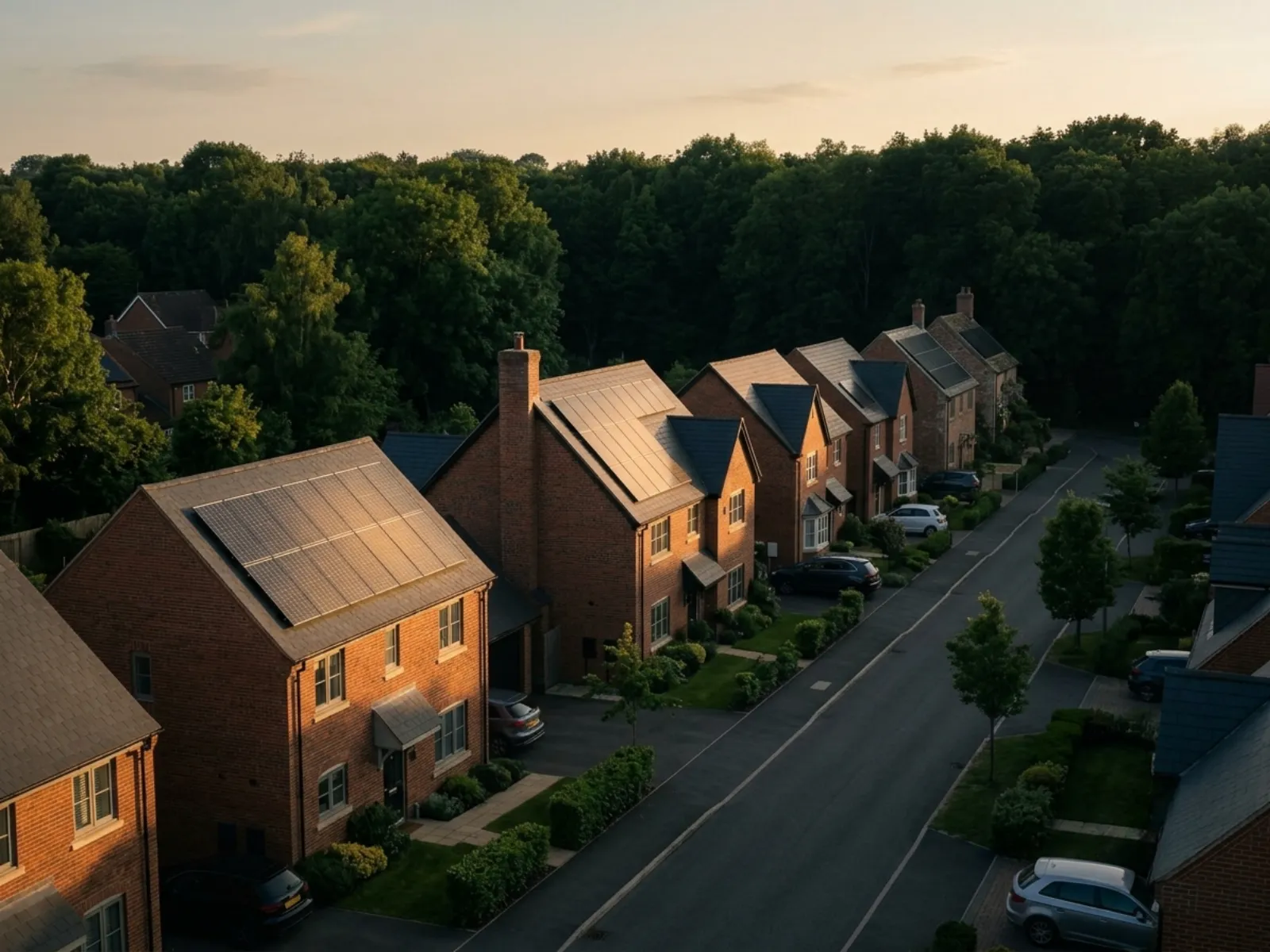
Two things set Liverpool apart for solar: the grid here is SP Energy Networks rather than Electricity North West, and the Liverpool City Region Warm Homes grant can put up to £15,000 towards measures including solar for eligible homes. Roofs run from the dense terraces of Toxteth and Anfield to the larger houses of Allerton and Woolton, and with 36 conservation areas, solar panel installation in Liverpool can need planning permission on a front-facing roof, as in the Georgian Quarter. The work is carried out by MCS-certified installers covering Liverpool.
- MCS-certified installers
- 0% VAT until 2027
- Covering Liverpool
- generation
- ~950 kWh per kWp a year
- typical system
- 3 to 4 kWp
- grid operator
- SP Energy Networks
- payback
- ~10 to 15 years
The quick version
- A well-sited Liverpool roof generates around 900 to 1,000 kWh a year for each kWp, so a typical 4 to 5 kWp system generates roughly 3,000 to 4,500 kWh.
- Liverpool is covered by SP Energy Networks, not Electricity North West, which is who your installer notifies about the connection.
- The Liverpool City Region Warm Homes grant can fund up to £15,000 towards measures including solar for eligible lower-income homes, though schemes are means-tested and often oversubscribed.
- Liverpool has 36 conservation areas, so front-roof solar in areas like the Georgian Quarter, Sefton Park and Woolton often needs planning permission.
- Solar is 0% VAT until 31 March 2027, and payback is usually around 10 to 15 years.
What solar generates in Liverpool
A well-sited Liverpool roof generates roughly 900 to 1,000 kWh a year for each kWp installed, a little below the sunniest parts of the South West but well within the worthwhile range. In practice a typical 4 to 5 kWp system generates somewhere around 3,000 to 4,500 kWh a year, depending on the roof.
As everywhere, orientation and shading matter more than the odd grey week. South is ideal, east or west still does around 80 percent as much over a year, and the real lever on payback is how much of your own solar you use rather than export.
The homes here
Liverpool splits fairly cleanly between dense inner terraces and leafier suburbs, and the roof tends to set the system size. Areas like Toxteth, Kensington, Anfield and Everton are mostly Victorian terraces. These often give you one usable roof slope and a small to mid-size system, and shading from neighbouring roofs is worth checking on the tighter streets.
The southern suburbs are different. Allerton, Childwall, Mossley Hill and Woolton have more semis, villas and detached houses with larger roofs that can take a bigger array. Some of the grandest streets are also the most protected, which is where the conservation rules come in.
Grants and funding in Liverpool
This is where Liverpool stands out from the rest of the Northwest. Alongside the national schemes, the Liverpool City Region runs a Warm Homes Local Grant, launched in March 2026, offering up to £15,000 a home towards measures that can include solar, for lower-income households in less efficient homes. Liverpool City Council also runs its own Warm Homes Local Grant within the city boundary.
Both are means-tested, solar is one of several possible measures rather than a guarantee, and the city scheme has been oversubscribed, with registrations taken for the next round. So it is genuinely worth checking your eligibility and the current round, but not something to bank on. If you do not qualify, most homeowners self-fund, and solar is 0% VAT until 31 March 2027.
Planning and conservation in Liverpool
Liverpool has a lot of protected streets. The council lists 36 conservation areas, covering about 9 percent of the city and around 19,000 homes, including the Georgian Quarter around Canning Street, Sefton Park, Princes Park, Mossley Hill, Wavertree and Woolton Village.
In these areas, panels on a front-facing roof usually need planning permission, and a rear slope or a less visible elevation is often the simpler route. Listed buildings need consent wherever the panels go. Outside the conservation areas, most installs are permitted development and need no application.
Your grid connection
Liverpool differs from most of the Northwest here. Your network operator is SP Energy Networks, not Electricity North West, which covers Preston and Manchester. It makes no difference to how solar works, it is simply who your installer notifies about the connection, usually a straightforward notification for a home-sized system.
Liverpool also sits in the Merseyside electricity price band, which tends to run a touch higher than the wider Northwest. That is a small point in solar’s favour, because it means every unit of your own generation you use is worth a little more.
What it could mean for your home
- about 10 panels
- 4 kW
- kWh a year
- ~3,700
- a year, typical
- £450–700
Take a typical three-bedroom semi in Allerton or Childwall. A 4 kWp system, about ten panels, generates roughly 3,600 to 3,800 kWh a year on a decent Liverpool roof. How much that saves you depends mostly on when you use electricity. Every unit you use as it is generated is worth about 25 pence off your bill, while every unit you export earns a few pence through the Smart Export Guarantee.
In practice that tends to be somewhere around £450 to £700 a year, at the higher end if you are home in the day or add a battery. Against a typical installed cost of £6,000 to £8,000, that is a payback of roughly 10 to 15 years, on panels that keep working well beyond 25. The estimate on this page works the numbers for your own roof and usage.
Common questions
- Is solar worth it in Liverpool?
- Yes for most homes. A roof here generates roughly 900 to 1,000 kWh per kWp a year, so a typical 3 to 4 kWp system pays back over around 10 to 15 years, faster if you use a lot of electricity during the day.
- Are there grants for solar in Liverpool?
- There can be. The Liverpool City Region Warm Homes Local Grant, launched in 2026, offers up to £15,000 towards measures that can include solar for eligible lower-income households, and the city council runs its own scheme. Both are means-tested and often oversubscribed, so check the current round and your eligibility.
- Does Liverpool use a different grid operator?
- Yes. Liverpool is covered by SP Energy Networks rather than Electricity North West. It does not change how solar works, it is just who your installer notifies about the connection.
- Do I need planning permission for solar in Liverpool?
- Usually not, but Liverpool has 36 conservation areas. In areas like the Georgian Quarter, Sefton Park and Woolton Village, front-roof panels often need permission, and listed buildings always do. Outside those areas most installs are permitted development.
- How much can I earn from exporting electricity in Liverpool?
- Through the Smart Export Guarantee, you are paid for each unit you send back to the grid, usually a few pence per unit. Using your own solar is worth far more, so the aim is to use as much as you can. Your installer registers the system so you can sign up with an SEG supplier.
- How long does installation take?
- From first enquiry to a working system is usually four to eight weeks, most of it scheduling. The time on your roof is typically one to two days.
- Who installs the panels?
- The work is carried out by MCS-certified installers covering Liverpool. MCS is the standard required for Smart Export Guarantee payments and most grants.
Reviewed by Daniel Osei · Last checked 1 July 2026
Sources
What happens next
- 1
Get your estimate
Answer a few quick questions for a rough idea of system size, cost and payback for your Liverpool roof. It takes about two minutes.
- 2
Compare a proper quote
If the numbers stack up, you get a real quote to weigh against the estimate. You decide in your own time, with no obligation.
- 3
Installed by MCS-certified installers
The work is carried out by MCS-certified installers covering Liverpool, who handle the survey, the fitting and the grid paperwork.
See what solar would do for your Liverpool home
Answer a few quick questions and we will model the likely cost, savings and payback for your roof. The work is carried out by MCS-certified installers covering Liverpool.